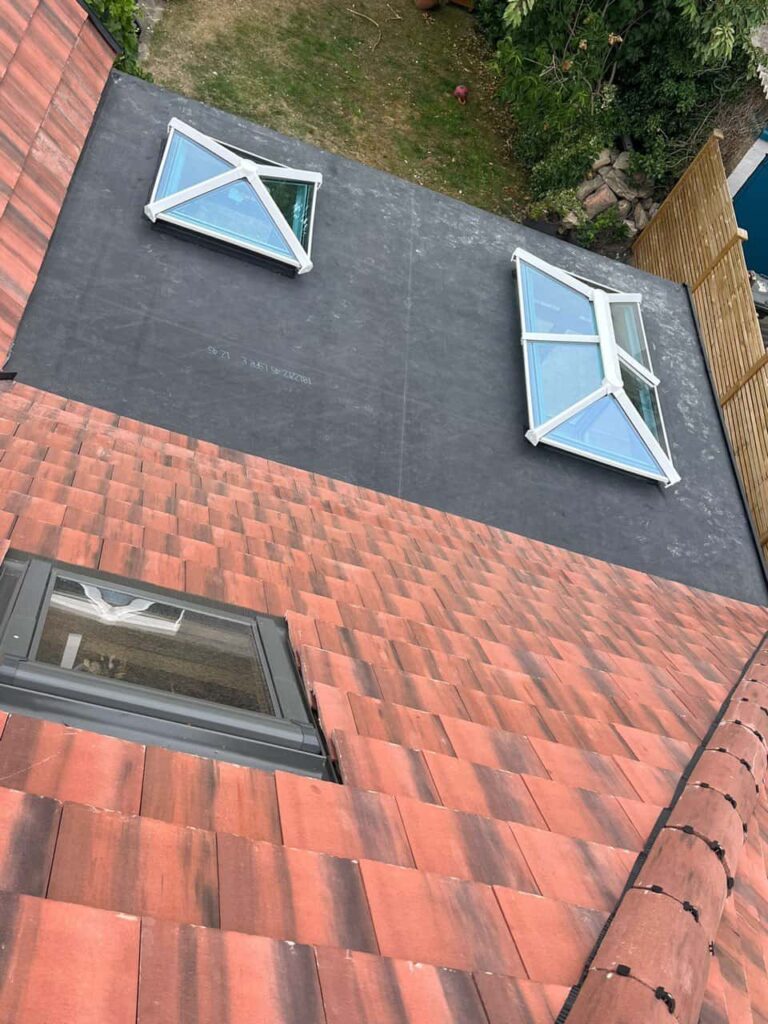
Flat roofs are designed with a slight fall that directs rainwater towards an outlet, gutter or drainage point. If water remains on the surface after the surrounding roof has dried, the roof may have developed a drainage or structural problem.
Standing water, often called ponding, does not always cause an immediate leak. However, persistent pools place the roof covering under prolonged stress and may indicate that part of the roof is no longer performing correctly. Identifying the cause early can help prevent avoidable deterioration.
What Causes Water to Collect on a Flat Roof?
Ponding develops when rainwater cannot leave the roof efficiently. The problem may be caused by a simple obstruction or by changes within the roof structure.
The most common causes include:
- Blocked outlets, gutters or downpipes
- Insufficient falls across the roof
- Low areas in the roof covering
- Movement or deterioration within the supporting deck
- Compressed insulation beneath the surface
- Raised repairs that interrupt water flow
- Debris restricting drainage routes
A professional inspection is needed to establish whether the issue is limited to drainage or connected to a wider roofing defect.
Blocked Outlets and Drainage Channels
Leaves, moss and other debris can collect around drainage points. Even a partial blockage may slow the movement of water enough for pools to form during prolonged rainfall.
Clearing the visible obstruction may improve drainage, but the surrounding roof should still be checked. Repeated blockages can leave trapped moisture around joints, seams and outlets, which are often vulnerable parts of a flat roof.
Insufficient or Uneven Roof Falls
A flat roof should never be completely level. Its structure must create enough fall for water to travel towards the intended drainage point.
If the original fall was inadequate, ponding may have been present from the beginning. In other cases, settlement or movement can gradually alter the surface levels. Water then collects in depressions rather than following the designed drainage route.
The position and depth of the pools can help a roofer determine whether local repairs are suitable or whether the roof requires more extensive correction.
Movement in the Roof Deck
The deck supports the waterproof covering and helps maintain the correct roof profile. If it begins to sag, flex or deteriorate, shallow depressions may appear on the surface.
Deck movement can result from age, prolonged moisture exposure or inadequate support. Simply treating the visible surface will not provide a lasting solution if the material beneath it is no longer stable. The affected section may need to be opened so its condition can be properly assessed.
Deteriorated or Compressed Insulation
Some flat roof systems contain insulation beneath the waterproof layer. If this becomes compressed, displaced or affected by moisture, it can contribute to uneven surface levels.
A soft or sunken area may allow water to gather after every period of rain. Because the underlying condition is hidden, a detailed inspection is often necessary to distinguish insulation problems from surface-level wear.
Previous Repairs Can Alter Drainage
A localised repair should restore the waterproof layer without obstructing the natural flow of water. However, thick patches, poorly formed joints or raised repair materials can create small barriers across the drainage route.
Water may then collect behind the repaired section. A successful remedial repair must address both weather resistance and the way rainwater travels across the roof.
Why Persistent Ponding Should Not Be Ignored
Standing water adds weight to the roof and keeps the covering wet for longer. Repeated cycles of moisture, temperature change and drying can gradually weaken seams, joints and surface materials.
Persistent ponding may contribute to:
- Blistering or splitting of felt coverings
- Deterioration around joints and outlets
- Growth of moss, algae and organic matter
- Increased accumulation of dirt and debris
- Premature ageing of the waterproof layer
- Water entering through an existing weakness
- Further deflection in vulnerable areas
A small pool is not necessarily evidence that the entire roof has failed. What matters is how long the water remains, why it is collecting and whether the surrounding materials are still sound.
Signs the Problem Needs Professional Attention
Arrange an inspection if water regularly remains on the roof well after rainfall or if the affected area is becoming larger.
Other warning signs include:
- A noticeable dip in the roof surface
- Cracks, blisters or open seams near the pool
- Softness beneath the covering
- Staining or dampness inside the property
- Overflowing gutters or outlets
- Plant growth in areas of standing water
- Repeated temporary repairs in the same location
These signs may indicate that ponding is a symptom of a deeper problem rather than an isolated drainage issue.
How a Roofer Identifies the Cause
A professional assessment considers the whole drainage path. This includes the roof covering, surface falls, outlets, gutters, edges and the condition of the supporting materials.
The appropriate remedy may involve clearing drainage points, correcting a localised low area, renewing damaged materials or rebuilding part of the roof to restore effective falls. The solution should address the reason water is collecting, not merely remove the water currently visible.
Conclusion
A flat roof may begin holding standing water because of blocked drainage, inadequate falls, structural movement, compressed insulation or poorly formed previous repairs. Although ponding does not always mean the roof is leaking, it can accelerate deterioration and reveal weaknesses that require attention.
Huntingdon Roofing Repairs can assess flat roofs in Huntingdon, Cambridgeshire, identify why water is collecting and recommend an appropriate repair. If persistent pools have appeared on your roof, contact the team to arrange a professional inspection.
Call us on: 01480 776 289
Click here to find out more about Huntingdon Roofing Repairs
Click here to complete our contact form and see how we can help with your roofing needs.